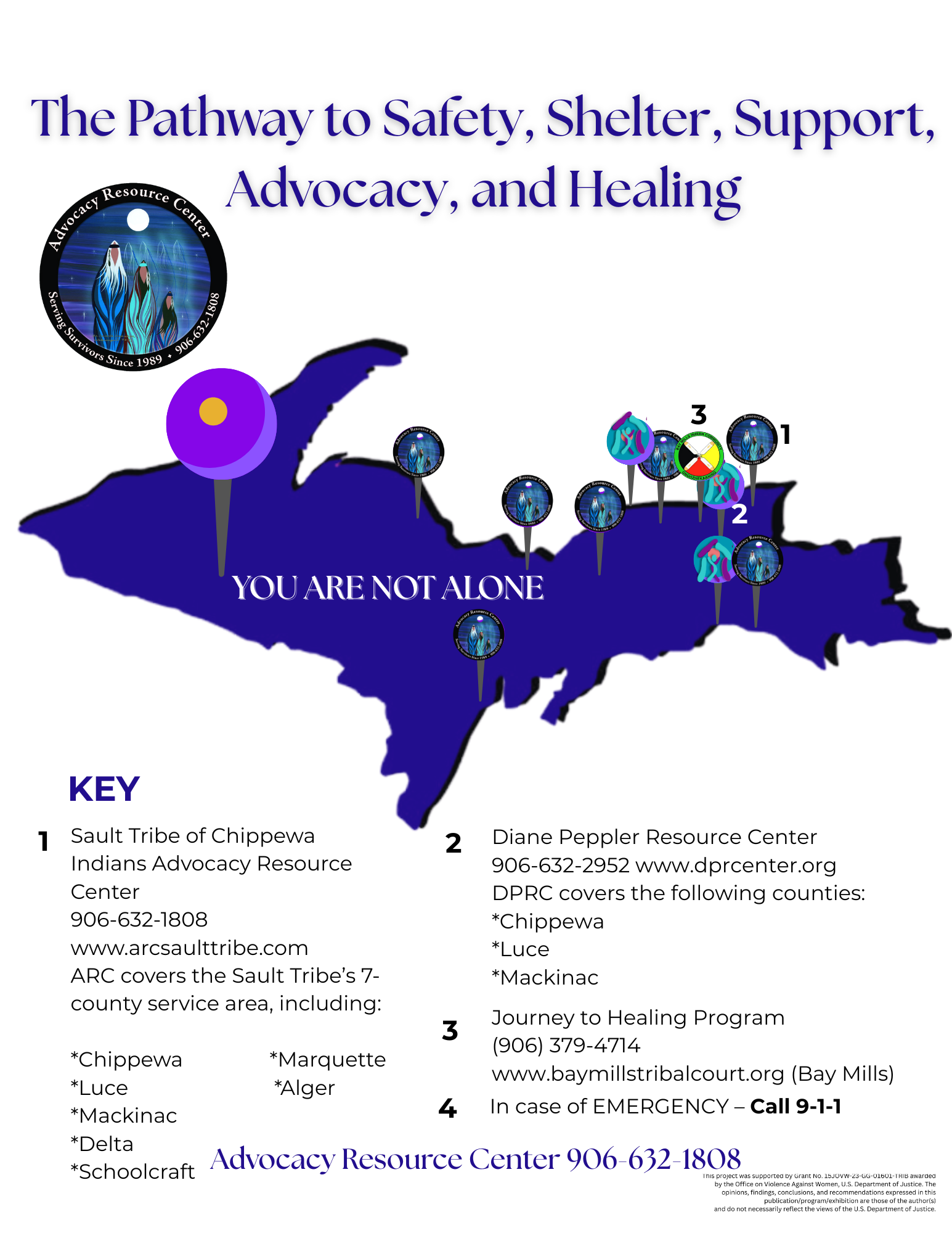
2026 January is Stalking and Human Trafficking Awareness Month
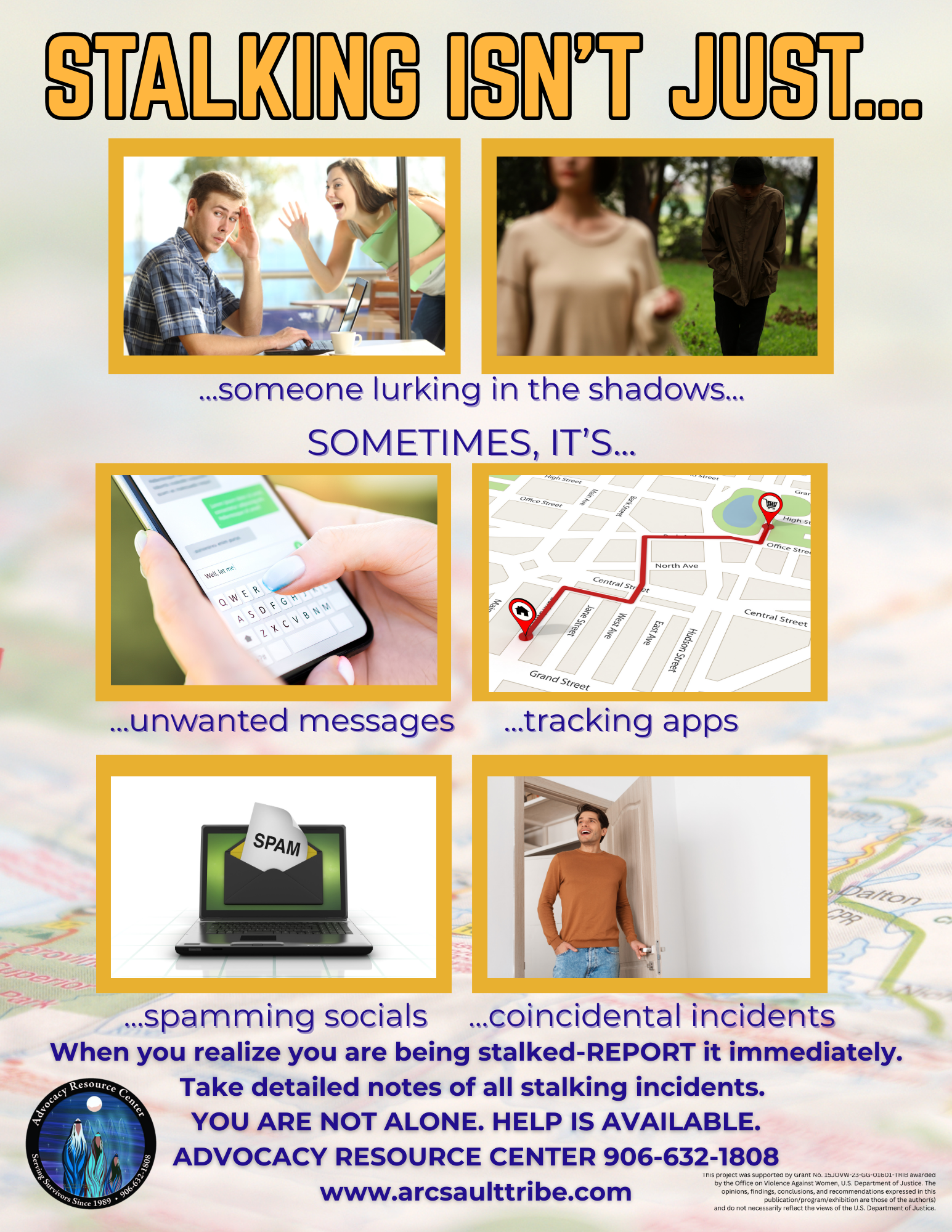
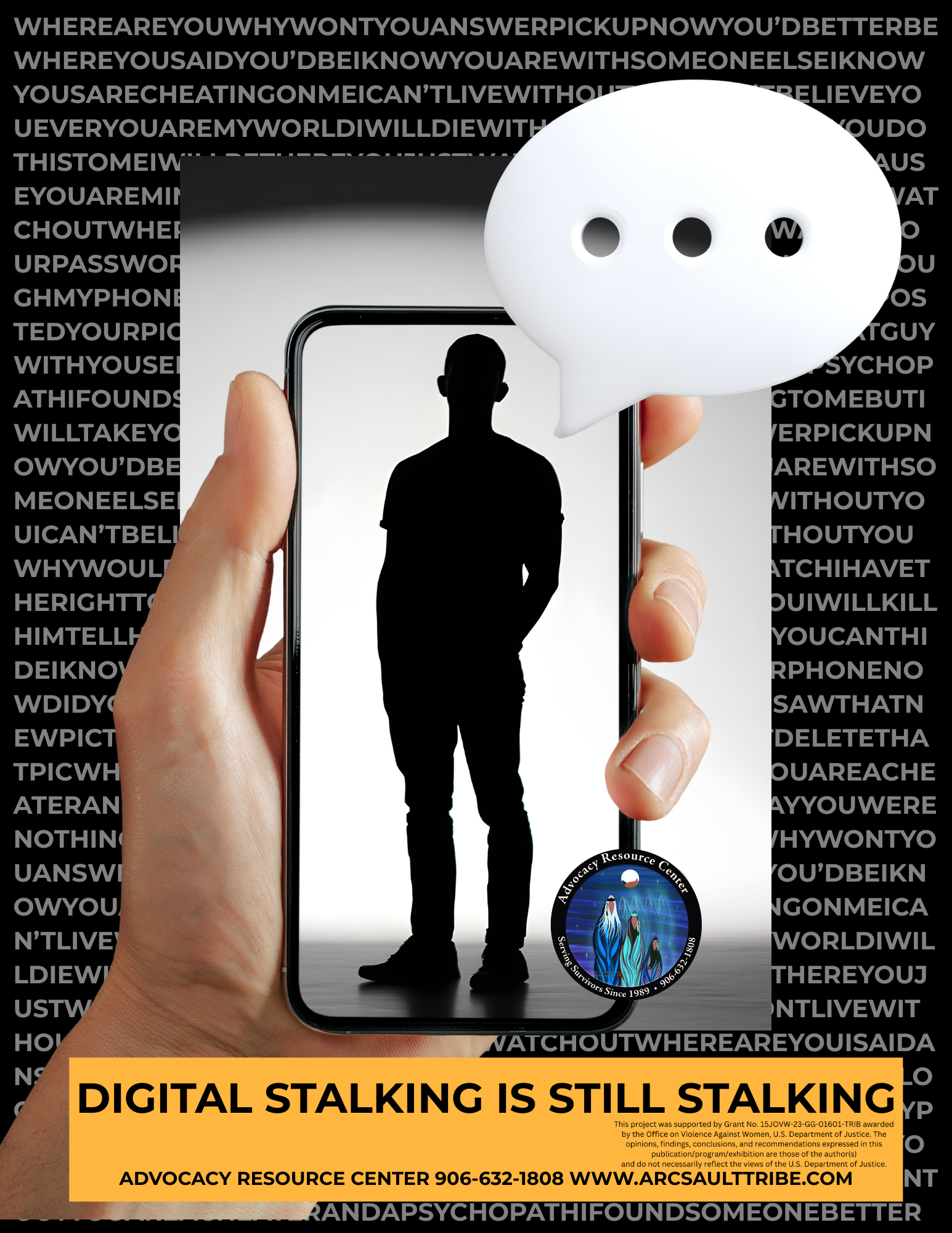
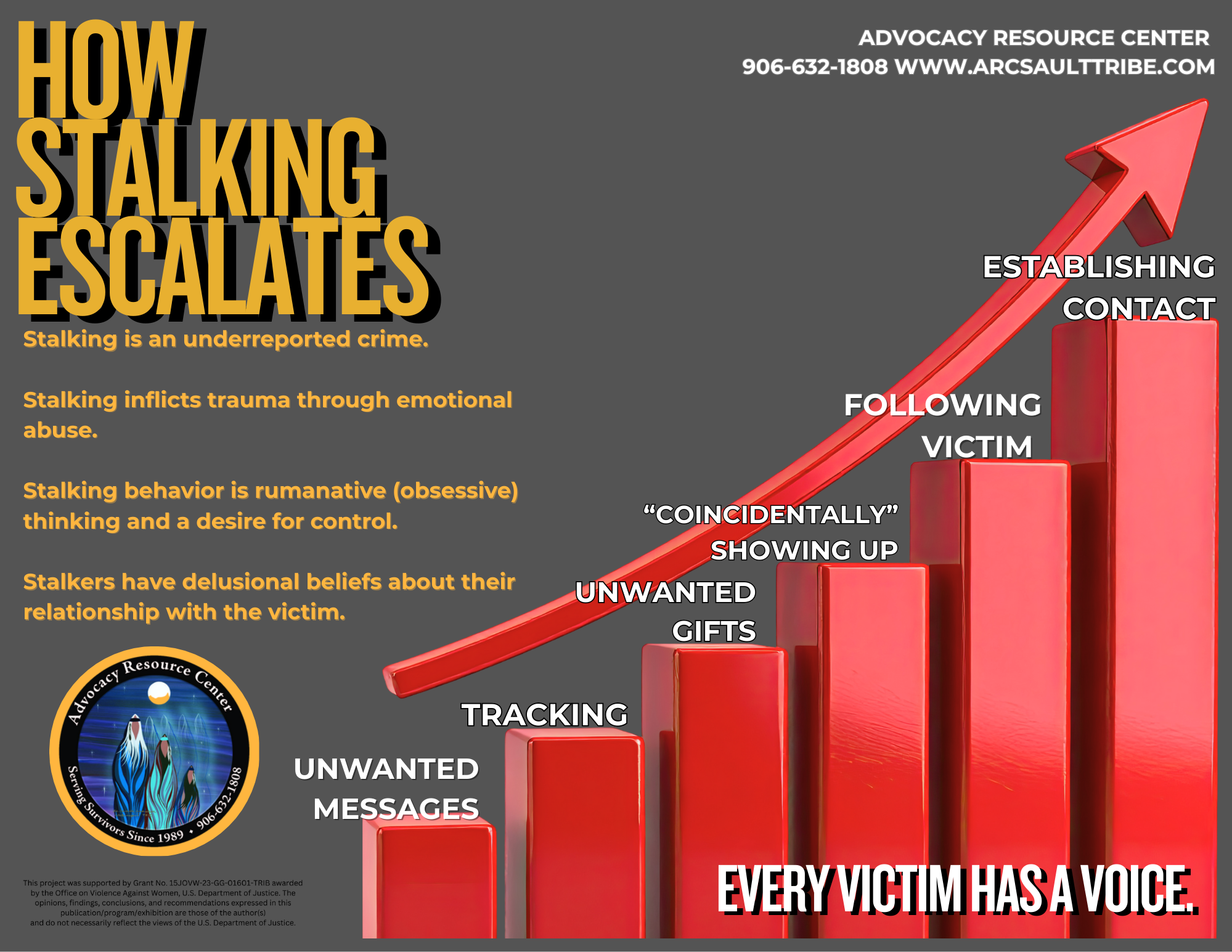
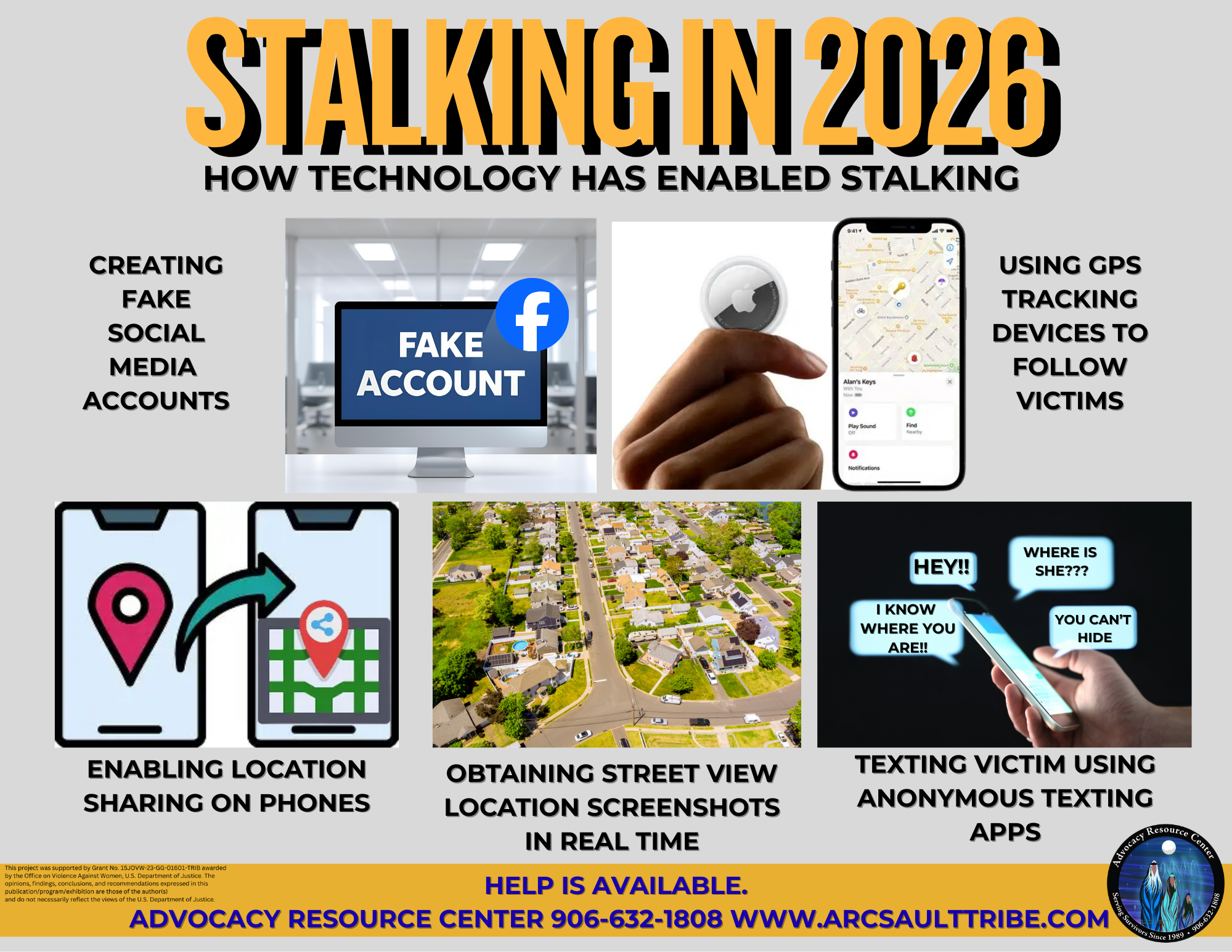
January is the time of renewal and starting fresh for many; however, serious issues remain and continue to plague our Native people. The Advocacy Resource Center will continue to inform you and advocate on sensitive topics throughout the year, bringing you the most up-to-date and informative resources and awareness on various forms of abuse. January is designated as Stalking Awareness Month. Stalking is defined as “a pattern of behaviors directed at a specific person who would cause a reasonable person to feel fear”, according to the Department of Justice. There are a variety of methods or tactics that stalkers use to pursue their victims. Stalking can include, but is not limited to, having unwanted or unsolicited phone calls, visits, texts, emails, social media contacts, unwanted gifts, or approaching the victim’s family or friends.
Also, monitoring, surveillance, property damage, and threats to the victim or their family are all considered stalking behaviors. Stalking victims are usually stalked by someone they know. Typically, a current or former intimate partner, acquaintance, or family member, and sometimes even a stranger.
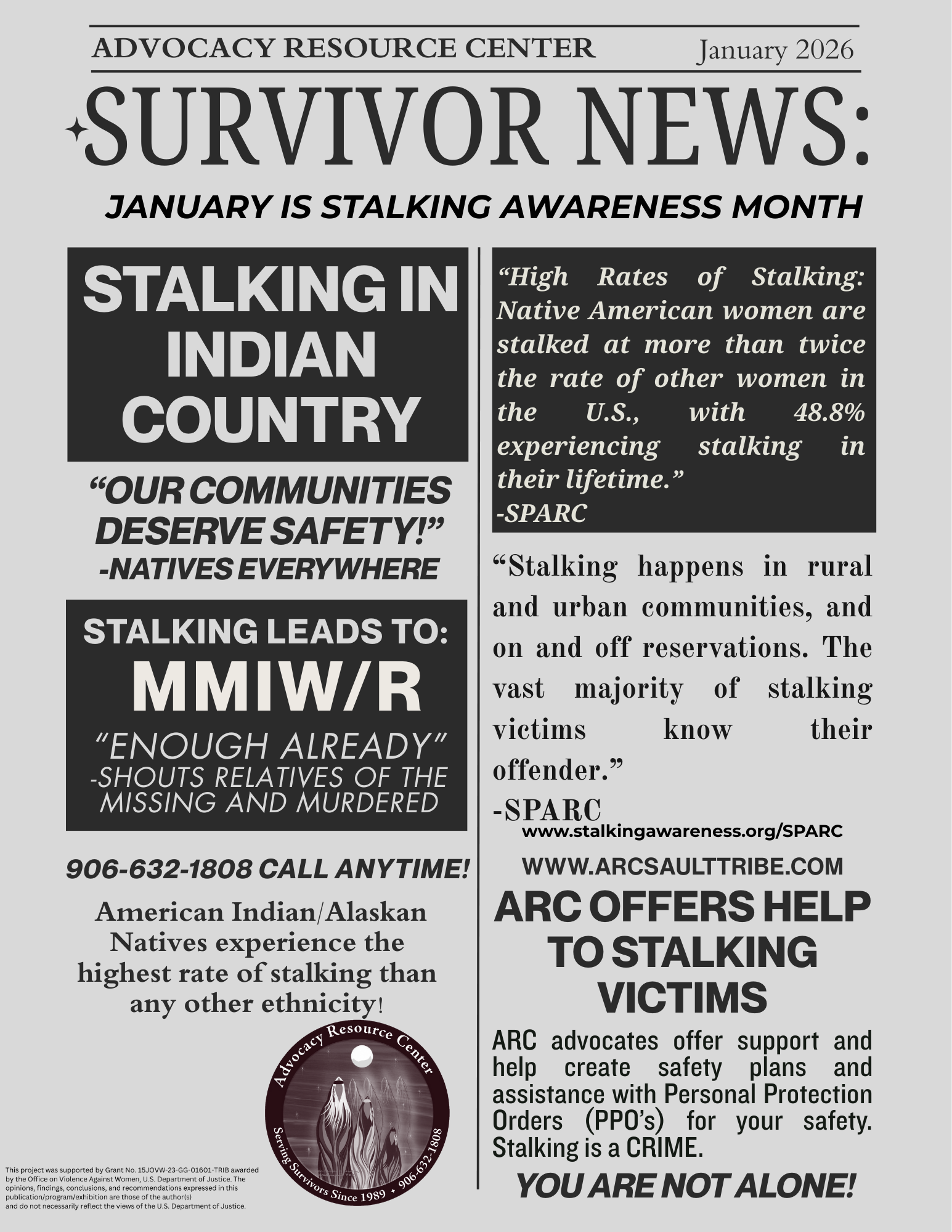
According to a quote from HumanTraffickingSearch.org, “Native women are stalked at more than twice the rate of other women. Native women are murdered at over ten times the national average. Native women experience violent victimization at a higher rate than any other U.S. population.
Congressional findings are that Native American and Alaska Native women are raped 34.1%, more than 1 in 3, will be raped in their lifetime, and 64%, more than 6 in 10, will be physically assaulted. Native women are stalked at more than twice the rate of other women. On some reservations across America, Native women are murdered at more than ten times the national average. Non-Indians commit 88% of violent crimes against Native women. ”Stalking is a crime in all 50 states, but requires thorough documentation of incidents to help solidify a prosecution in the case. Maintaining a “stalking log” is best to keep a record and document all stalking-related behaviors.
These behaviors include harassing or repetitive phone calls or text messages, emails, social media contacts, acts of vandalism, and threats. Keeping an accurate log with dates, times, locations, and even photos of the stalker in the act can be helpful to prosecute the stalker. It is important to note that should you pursue criminal action, your logs may be admitted into evidence in a court case, and to be mindful of the information you put in the log as the stalker may eventually see it. You can print a stalking log at www.stalkingawareness.org.
As many victims often feel the emotional effects of the acts of a stalker, your local advocates can assist with safety plans and maintaining your stalking log. Contact local law enforcement if you feel you are being stalked. As a reminder, the Sault Tribe of Chippewa Indians Board of Directors passed a resolution in September of 2022 that authorized criminal code revisions to expand tribal jurisdiction over non-Natives committing crimes against Native citizens involving child violence, sexual violence, sex trafficking, stalking, and assault against justice personnel that occur on tribal land.
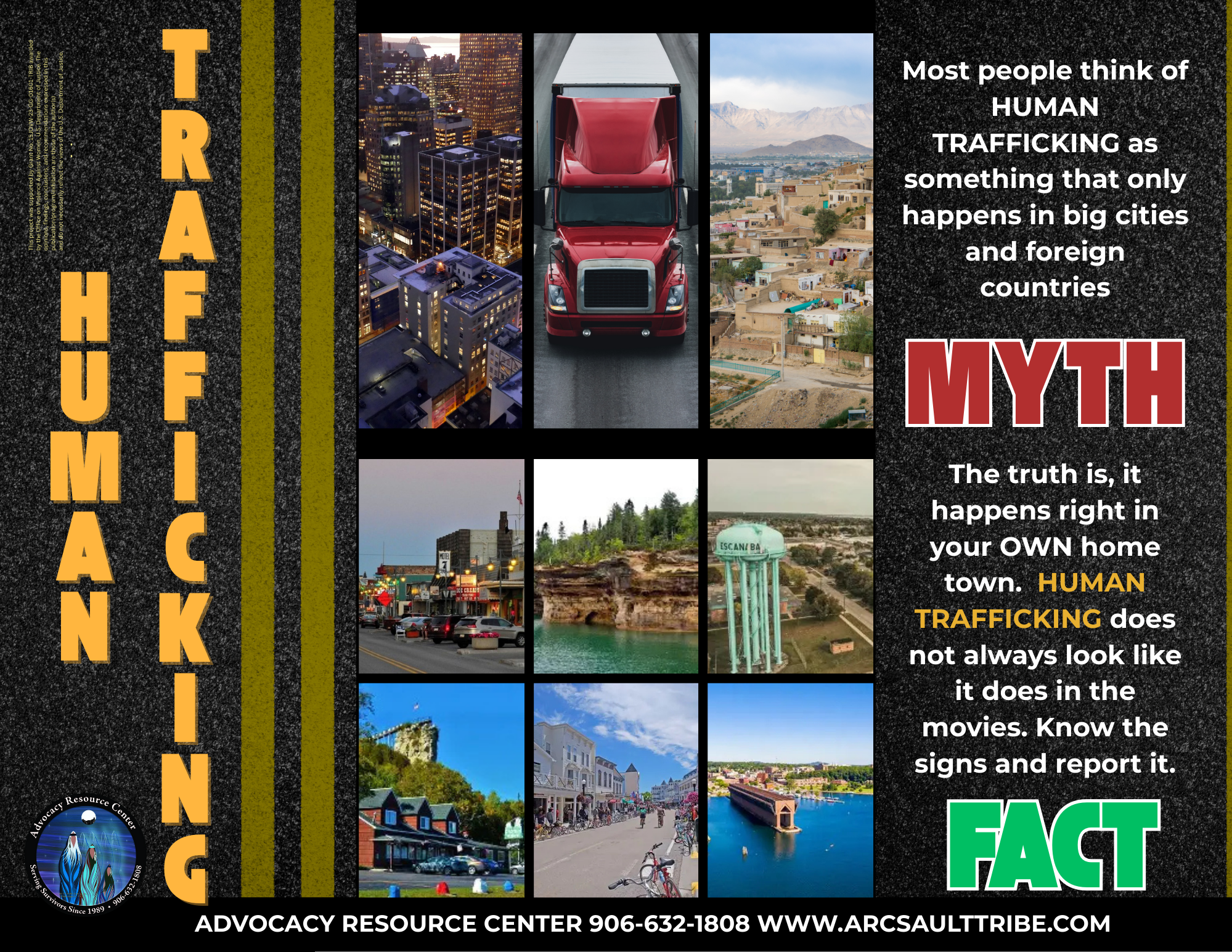
January is also Human Trafficking Awareness Month. Human trafficking is simply defined as the use of force, fraud, or coercion to obtain some type of labor or commercial sex act. Human trafficking is considered modern-day slavery.
Human trafficking is active and prevalent in the United States and even more so internationally. Human trafficking does not discriminate and anyone can be a victim. However, the Native American population is considered to be one of the most vulnerable populations to be trafficked. According to HumanTraffickingSearch.org, Native Americans are considered vulnerable due to a higher rate of poverty, rape, and being placed in the foster care system.
These risk factors can be attributed to the historical traumas placed upon Natives due to the erratic removal of Native children and placements in residential boarding schools, amongst other forms of forced removal, and assimilation policies. Native children who suffer such abuse and neglect, causing lifelong trauma while having no solid foundation for nurturing parenting practices, place their children at risk for a traumatic cycle for future generations.
Human traffickers play on these vulnerabilities. Traffickers prey heavily upon youth, especially those who are homeless, come from broken families, have experienced physical or sexual abuse, are runaways, or are raised in group home settings. Traffickers often approach those with low self-esteem or insecure youth who desire a better lifestyle.
Traffickers may befriend and gain the trust of youth either in person or via social media to then lure them with empty promises of riches, love, and the happiness they may long for. Many red flags might indicate a human trafficking situation. Depending on where you live or work, the red flags may or may not appear abnormal or stand out immediately; however, the closer you look, the more obvious they become.
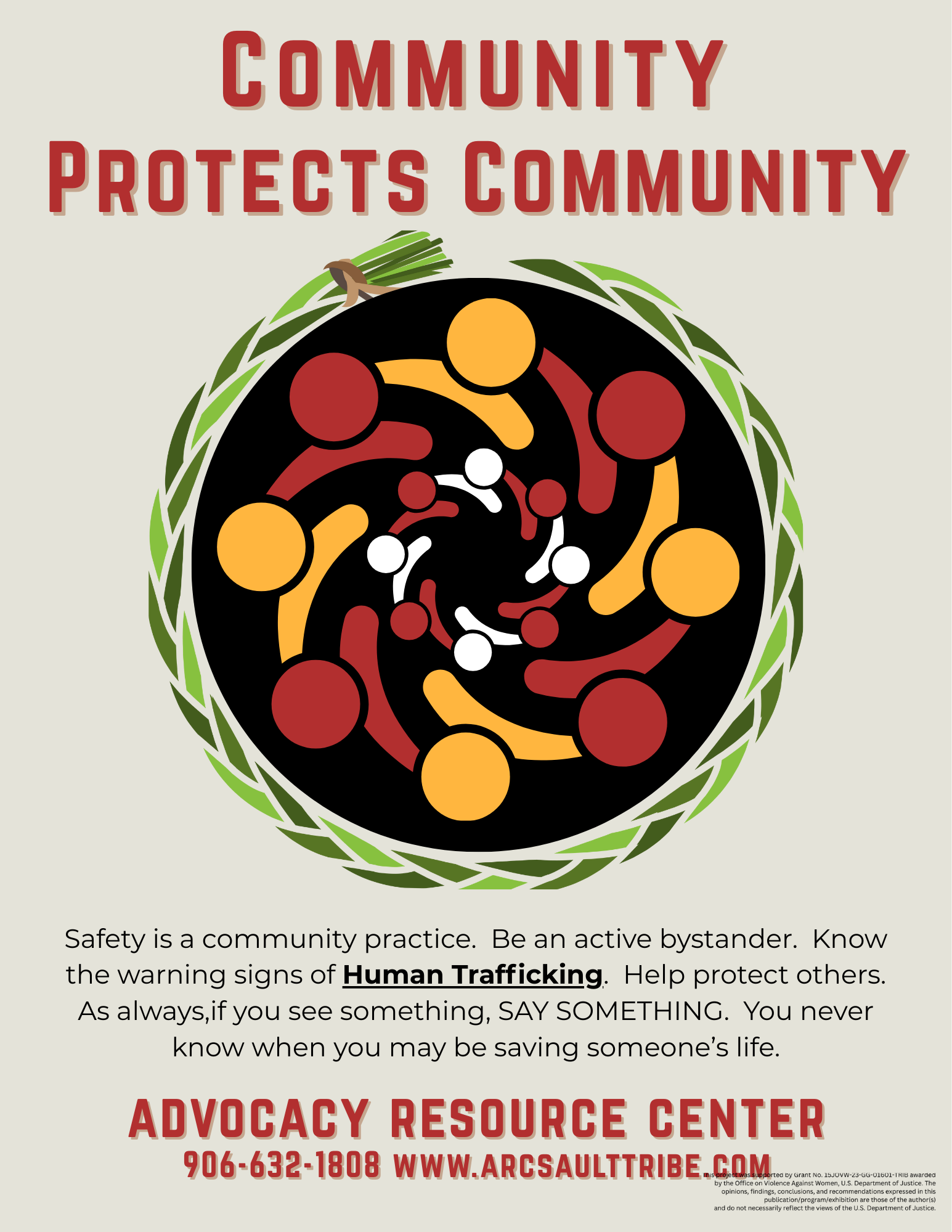
Always be aware of your surroundings, as traffickers lurk in the most obvious places: bars, restaurants, sporting events, stores, parking lots, and other public venues.
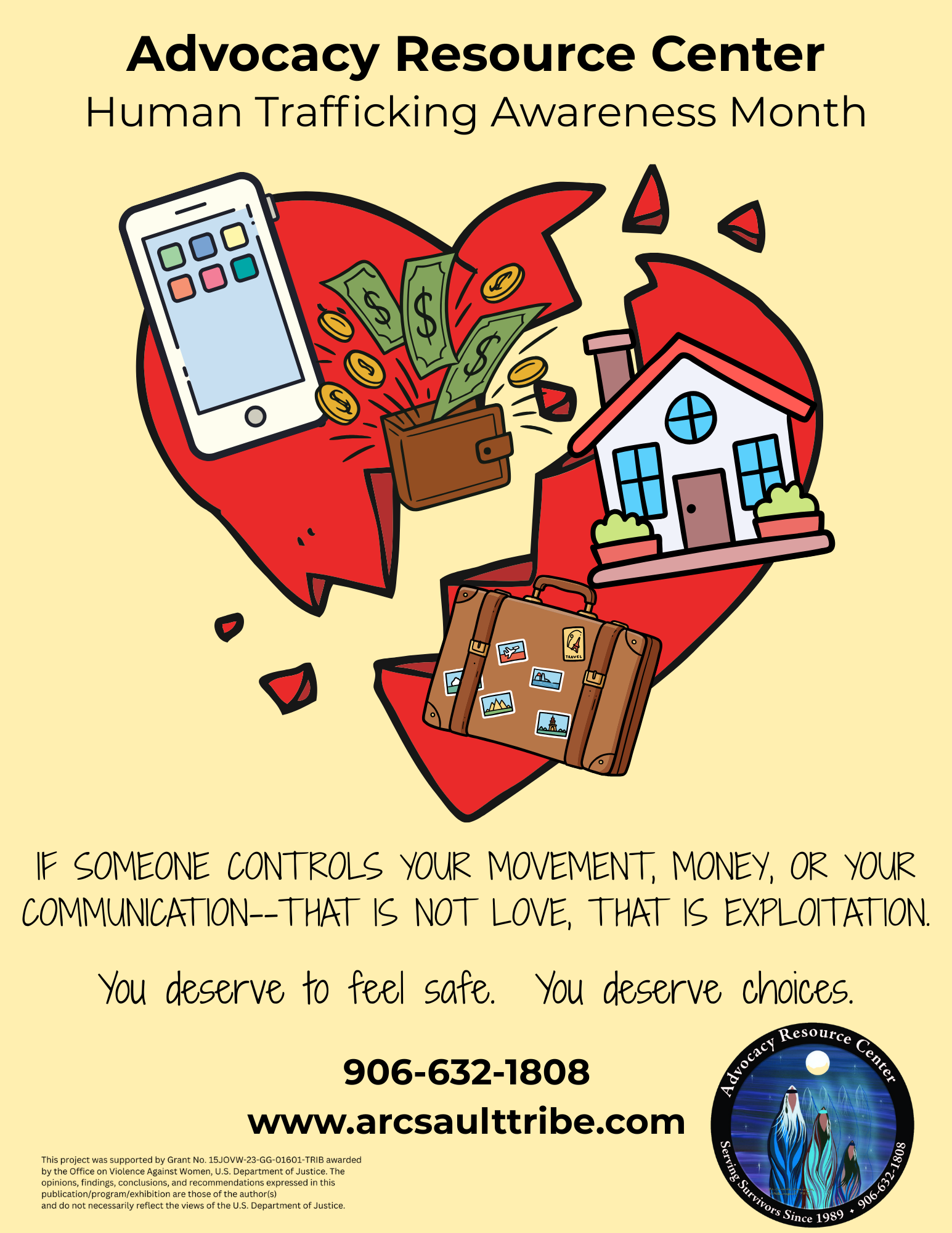
Some of the red flags include, but are not limited to: • Person appearing malnourished
• Showing signs of physical injuries and abuse
• Avoiding eye contact, social interaction, and authority figures/law enforcement
• Having rehearsed or seemingly scripted responses when asked a question
• Lacking official identification or paperwork
• Lacking personal possessions
• Working excessively long hours with no pay
• Youth checking into hotels/motels with older males
• Poor physical and/or dental health
• Tattoos/ branding on the neck and/or lower back
• Untreated sexually transmitted diseases
• Small children serving in a family restaurant
• Security measures that appear to keep people inside an establishment - barbed wire inside of a fence, bars covering the insides of windows
• Must work against their will
• Has been threatened with violence, against their loved ones, arrest, or deportation
• Can only leave home to go to work, or that activities outside of work are highly controlled.
- Has moved from place to place often.
• A person is unfamiliar or unaware of their surrounding environment.
• Person has no money or access to money
• Has limited contact with friends or relatives Do not attempt to take matters into your own hands, as you may make the victim’s situation worse.
Give authorities as many details as possible. Provide license plate numbers, a thorough vehicle description (make/model/color), names, addresses, etc. Human trafficking is real, and it is most likely happening within your own community. If you suspect someone is being trafficked, contact your local authorities.
To get help from the National Human Trafficking Hotline: call 1-888-373-7888 or text HELP or INFO to BeFree (233733). To report suspected human trafficking to Federal law enforcement, call 1-866-347- 2423. If you need support, contact the Advocacy Resource Center at 906-632-1808.