November is Strangulation and Suffocation Prevention Month
Strangulation Awareness for November The Advocacy Resource Center is recognizing November as Strangulation Awareness Month.
Strangulation is a lethal form of assault that can kill a person within minutes. Strangulation is not to be confused with “choking”. Strangulation is pressure applied from the outside that cuts off airflow and/or blood vessels in the neck, preventing oxygen from reaching the brain. Choking, meanwhile, refers to a blockage or obstruction in the throat that makes breathing difficult.
Strangulation is a significant warning sign for lethality in domestic violence cases. Perpetrators often use strangulation as a form of power and control over their intimate partner. Pressure placed upon the victim’s throat can cause unconsciousness and death.
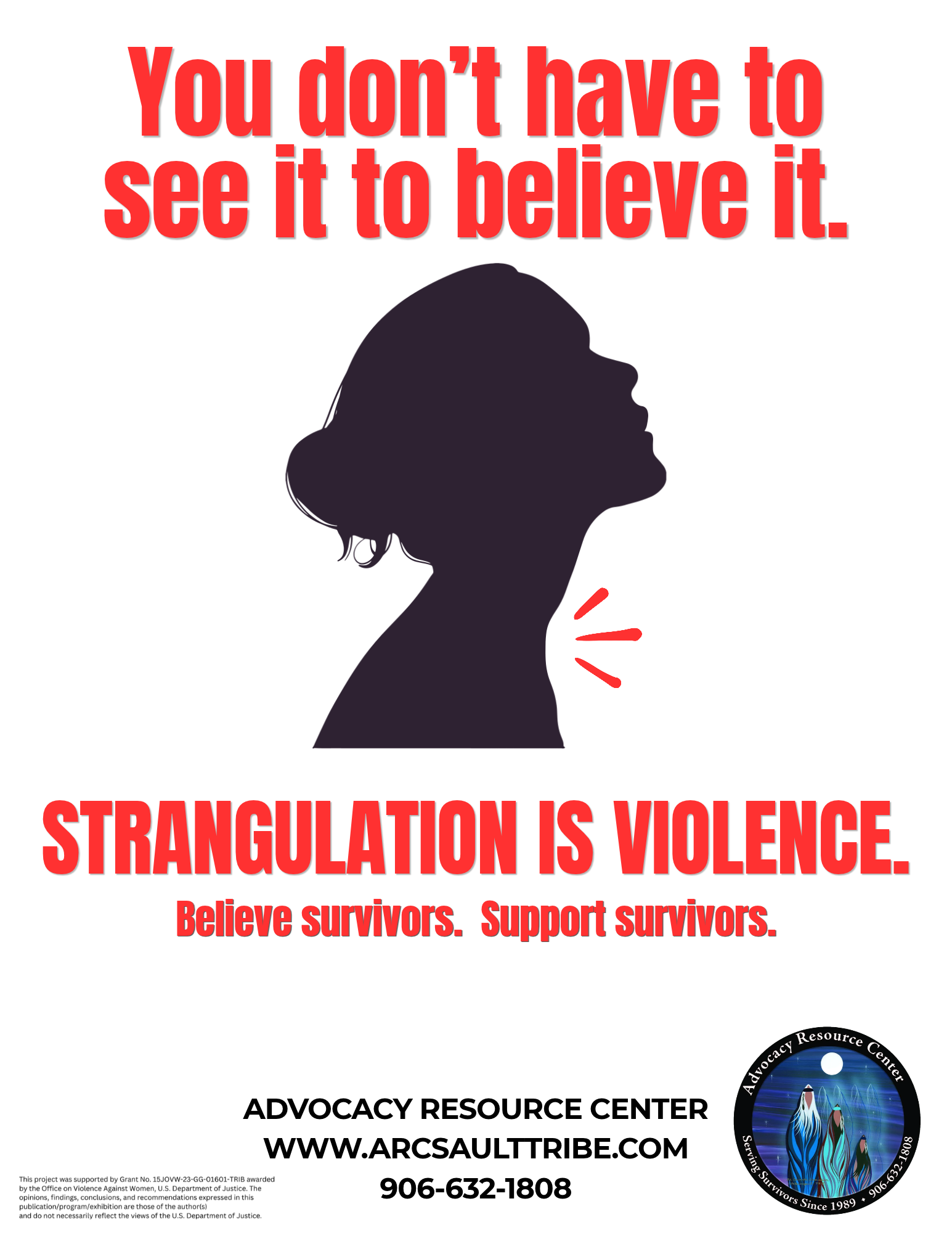
Strangulation for any length of time can be exceedingly dangerous. It can cause loss of consciousness within 5 to 10 seconds and death within 1 to 3 minutes. (The Domestic Violence Services Network/Strangulation). It has been reported that women who have survived strangulation by their partner are eight times more likely to die at his hand in another attack.
Strangulation is relatively easy to identify, as many symptoms occur in the facial area. Some common visible signs of strangulation include petechiae (red spots) in the eyes or the whites of the eyes may be filled with blood, swollen lips, droopy eyelids, facial drooping or swelling, scratch marks to neck or face, raspy or hoarse voice, trouble swallowing, drooling, petechiae on earlobes, bruising on or bleeding from ears, swollen tongue, and/or bumps on head from falling or blunt force trauma.
A victim may also experience invisible symptoms, such as intense pain, vision changes, ringing in the ears, cuts in the mouth, swelling of the neck or throat, difficulty breathing, and/or voice changes. “Victims may look and even feel physically fine after being strangled but have internal injuries or delayed complications that are extremely serious and possibly lethal.
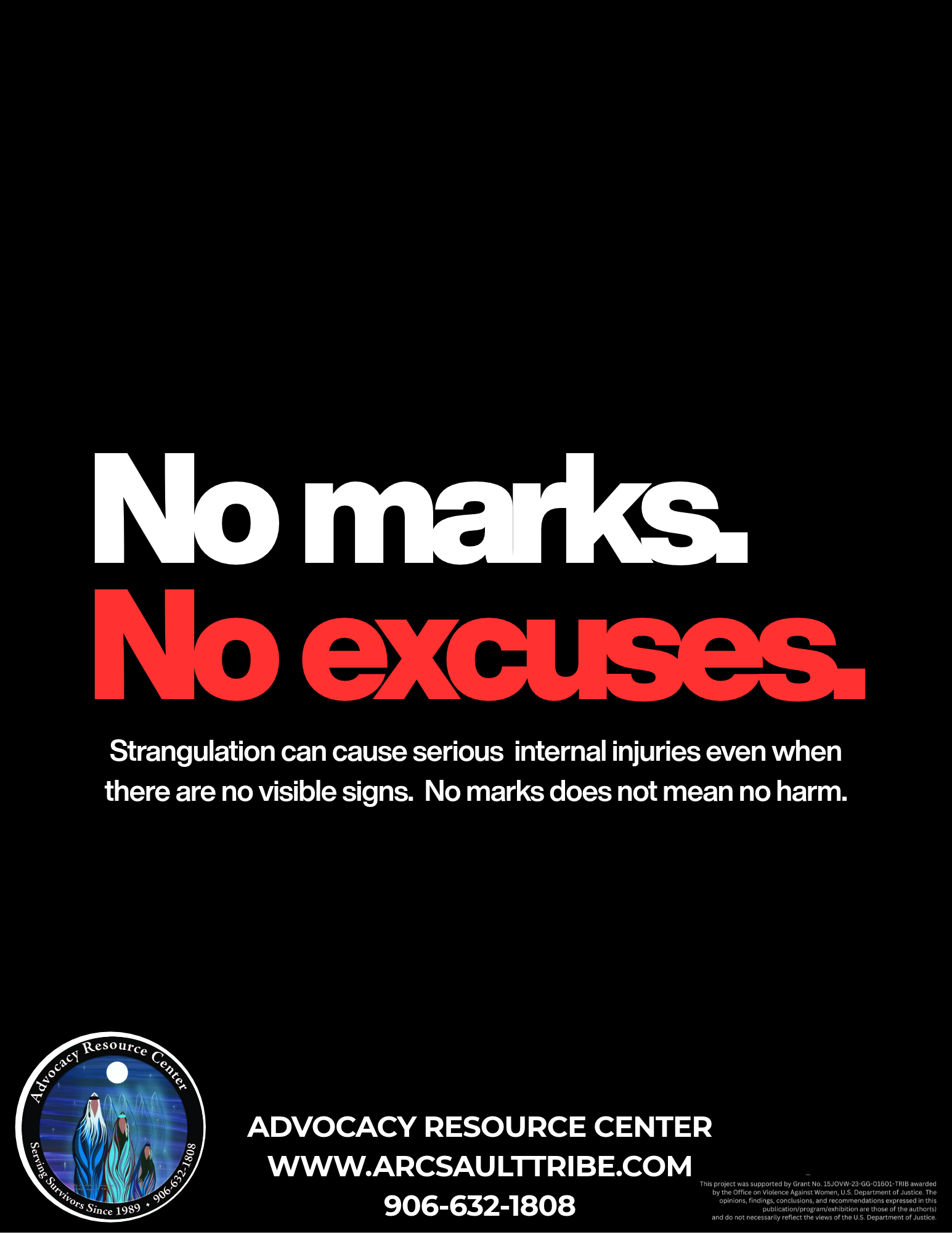
Potentially non-fatal delayed complications include swelling, hematomas, vocal cord immobility, and displaced laryngeal fractures.” (Training Institute on Strangulation Prevention Toolkit) Strangulation can cause serious health issues and psychological problems. Data on strangulation reveals a harsh picture of the severity of this kind of assault. One in four women will experience intimate partner violence in her lifetime. Of those, up to 68 percent will suffer near-fatal strangulation at the hands of their partner. Michigan law states that any person who assaults another person by strangulation or suffocation is guilty of a felony punishable by imprisonment for up to 10 years or a fine of up to $5,000, or both.
The law defines “strangulation or suffocation” as “intentionally impeding normal breathing or circulation of the blood by applying pressure on the throat or neck or by blocking the nose or mouth of another person.” Under the law, a victim doesn't need to suffer any actual injury for the State to charge a person with assault by strangulation. An aggressor’s intent may be inferred simply from the use of physical violence. (Michigan Legislature MCL - Section 750.84)