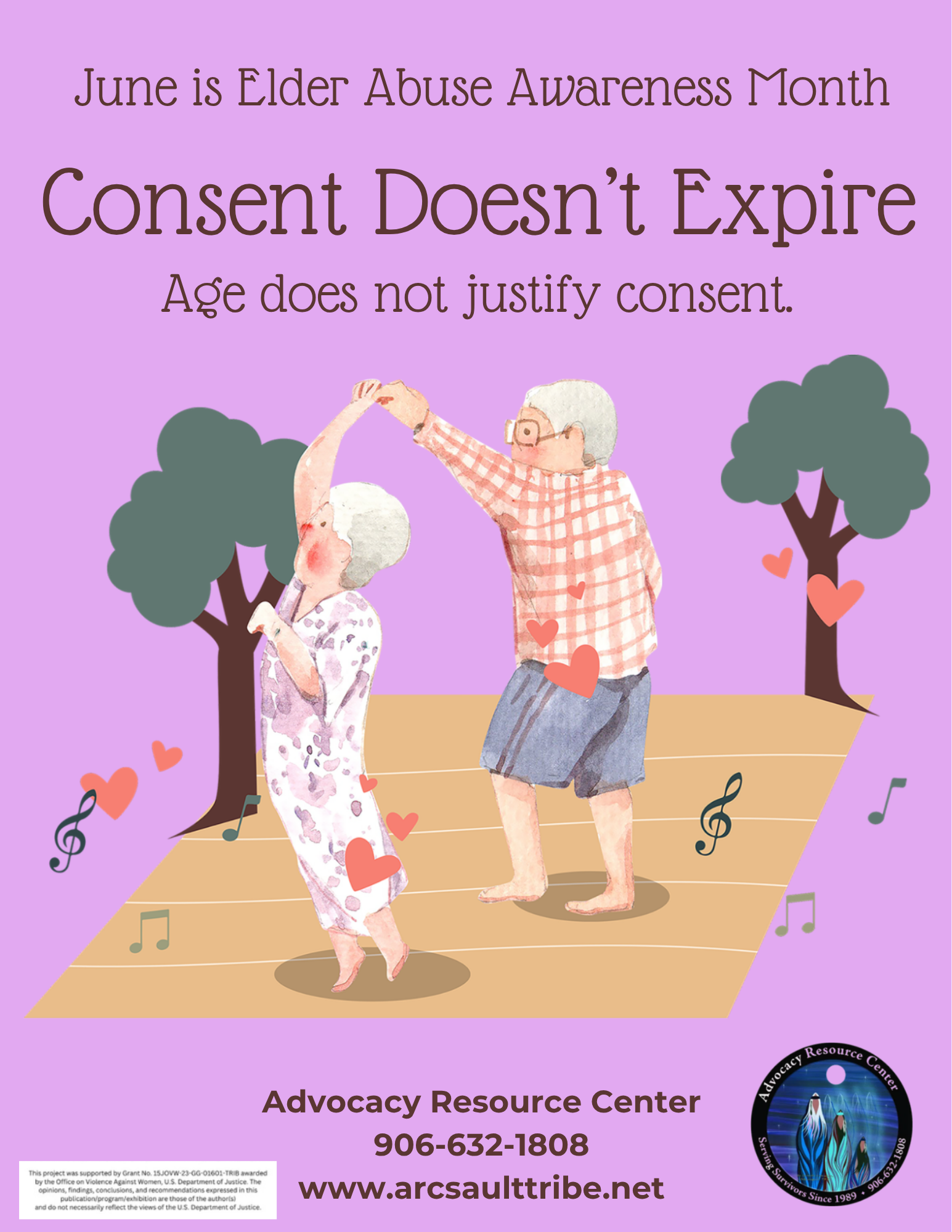
June is Elder Abuse Awareness Month
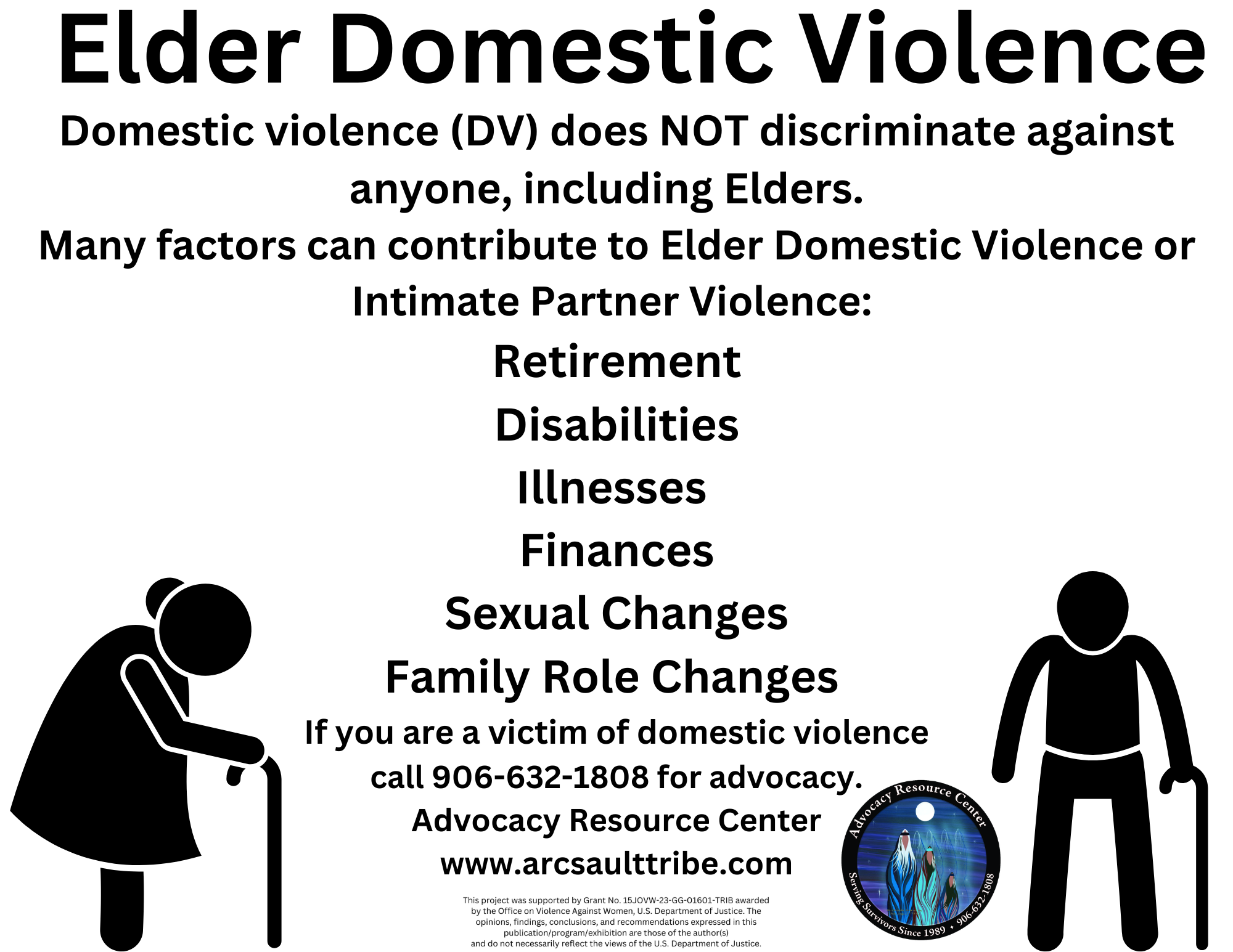
Domestic violence can affect Elders just as it impacts relationships in every age and stage. The fact that a couple ages together does not mean that abuse will cease if it has always been present in the relationship. Domestic violence in an elder relationship may increase due to various factors in the relationship, including, but not limited to, retirement, disabilities, illnesses, finances, sexual changes, and family role changes, which can play a large part in abuse and even neglect within the relationship.
Our Elders are one of our most precious resources. Elders are the connection to our past and hold stories and facts of our family’s history. Elders should always be treated with kindness and the utmost respect. Sadly, this is not the case for many of our loved ones. An Elder is legally defined as a person 65 and older.
However, in Native American communities, becoming an elder is not typically defined by a specific age but by a distinct cultural status earned through wisdom, knowledge, and a responsibility to others. Being an Elder is different from being elderly. “Elderly” is associated with age and the ability to care for oneself. Elder and elderly status vary from tribe to tribe. Out of respect, the term Elder will be used here.
The World Health Organization defines elder abuse as “a single or repeated act, or lack of appropriate action, occurring within any relationship where there is an expectation of trust, which causes harm or distress to an older person. This type of violence constitutes a violation of human rights and includes physical, sexual, psychological, and emotional abuse; financial and material abuse; abandonment; neglect; and serious loss of dignity and respect”. (https://www.who.int/news-room/fact-sheets/detail/abuse-of-older-people)
Domestic violence can affect Elders just as it impacts relationships in every age and stage. The fact that a couple ages together does not mean that abuse will cease if it has always been present in the relationship. Domestic violence in an elder relationship may increase due to various factors in the relationship, including, but not limited to, retirement, disabilities, illnesses, finances, sexual changes, and family role changes, which can play a large part in abuse and even neglect within the relationship.
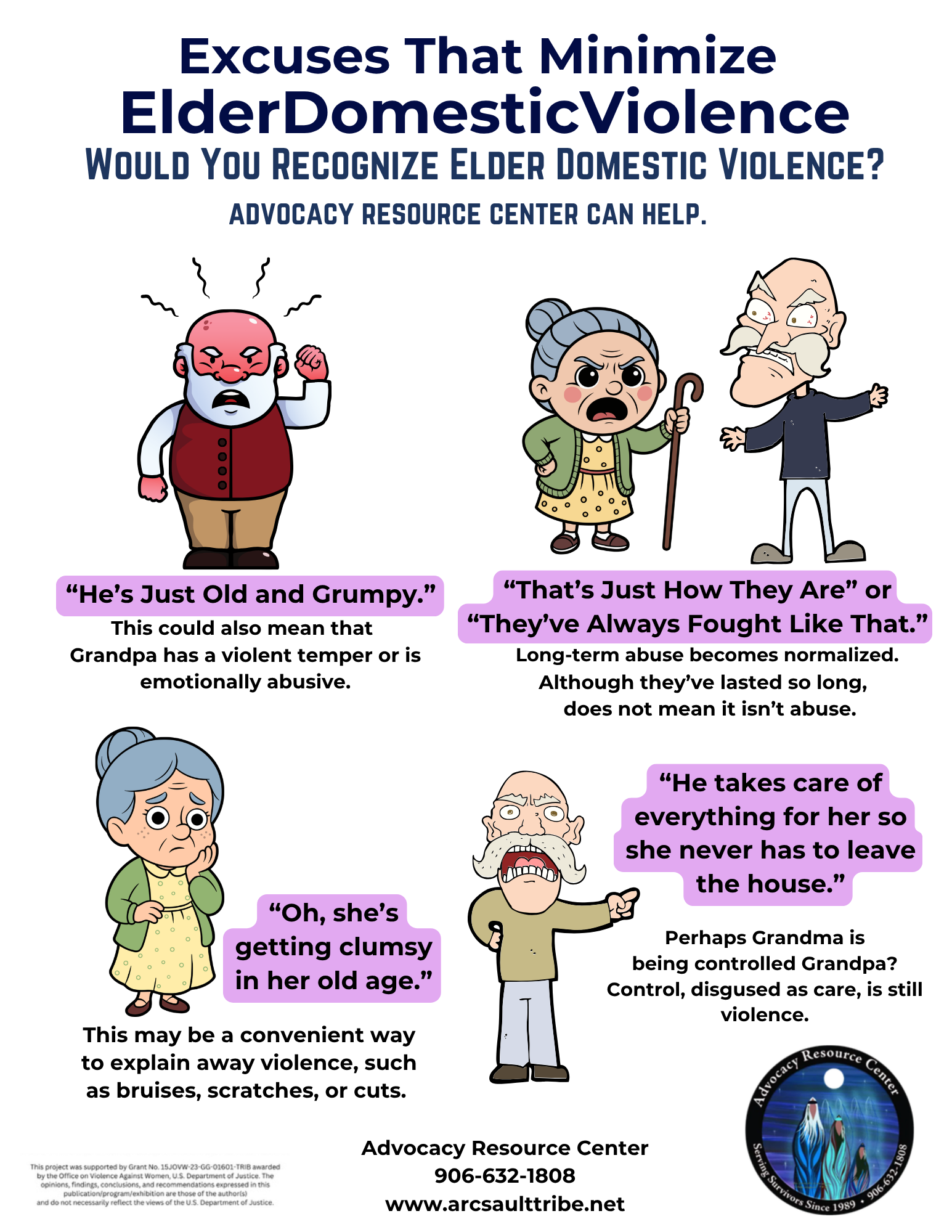
Such abuse can include physical abuse, emotional or psychological abuse, sexual abuse, financial or material exploitation, neglect, self-neglect, abandonment, and spiritual abuse. Our Elders are at a greater risk for abuse due to an increase in the Elder population and limited caregiving services and support. It is important that we believe our Elders when they disclose abuse to their caregivers or to us.
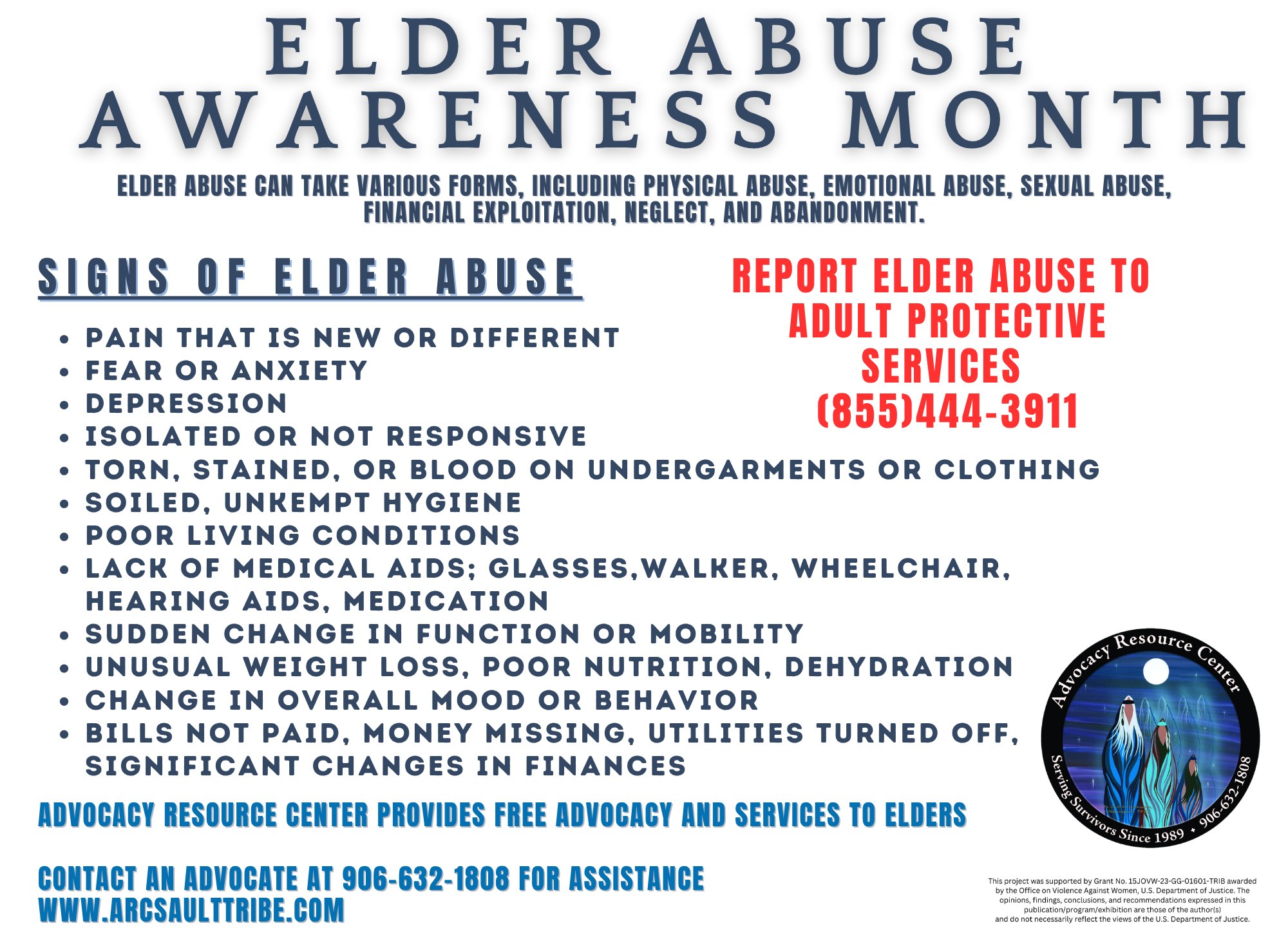
Many Elder survivors stay silent due to fear, dependence, shame, isolation, or concern for family members. However, their silence does not mean safety. Elders in abusive relationships may not even realize they are in an abusive relationship. Oftentimes, the abuse has been normalized or a regular part of their relationship for so long that they may be unaware that it is abuse at all. It is important to look for signs of abuse if you suspect something is off or you feel concerned for their safety.
Warning signs for caregivers and family members of Elders to watch for are:
Pain that is “new” or different
Fear or anxiety
Depression
Isolated or not responsive
Cuts, sores, or burns, broken bones, bruises, or welts
Untreated bed sores torn, stains, or blood on undergarments
Dirty, unkempt hygiene
Poor living conditions
Lack of medical aids; glasses, walker, dentures, hearing aids, medication
Sudden change in function or mobility
Unusual weight loss, poor nutrition, dehydration,
Change in overall mood or demeanor,
Unpaid bills, or utilities turned off
Significant changes in finances
Often, seniors fear repercussions for reporting abuse or are too frail to do so. It is crucial for us to recognize the signs of abuse and report it to the proper authorities. Adult Protective Services for Michigan can be contacted at 1-855-444-3911.
Sault Tribe Anishnaabek Community and Family Services provides Adult Protective Services and may be reached at (906) 632-5250 or (906) 495-1232. The Advocacy Resource Center is also available for advocacy and support. Please call 906-632-1808 to speak to an advocate.